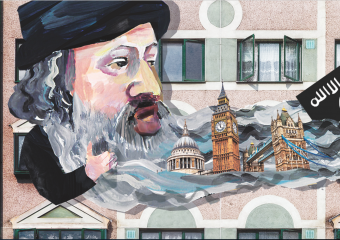

Blowing up the Nusra Front

abu mustafa 2


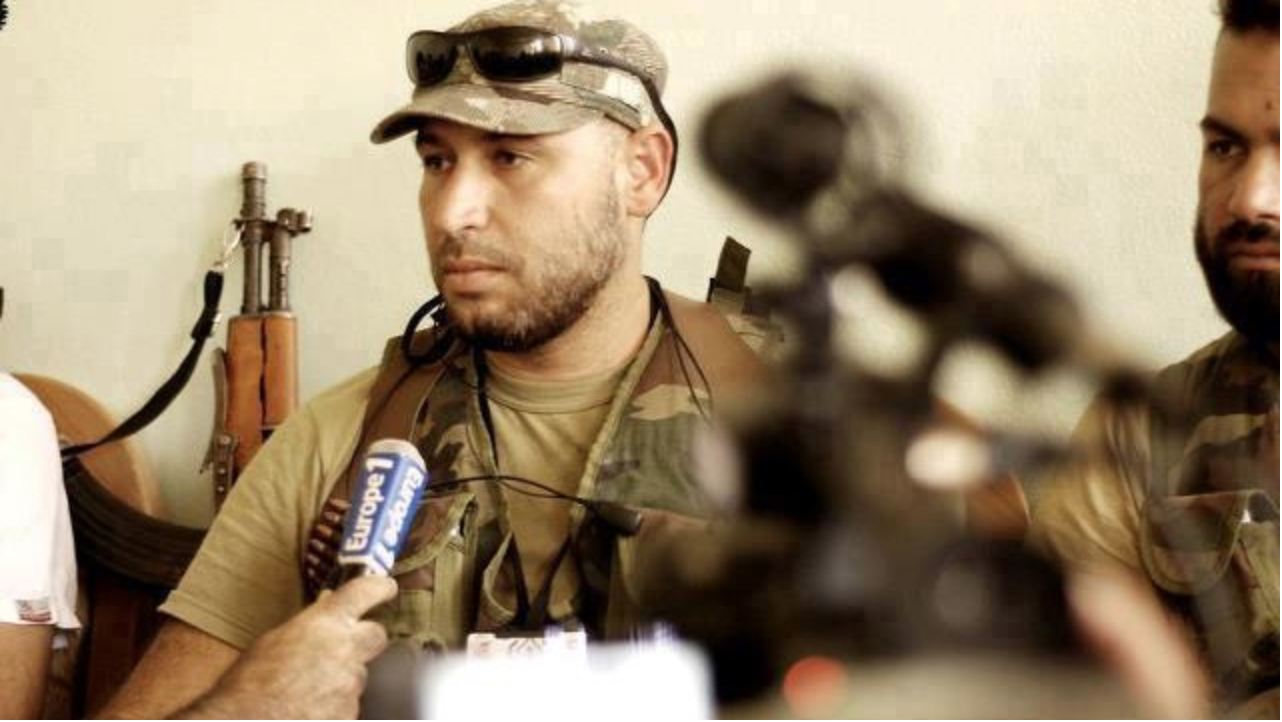
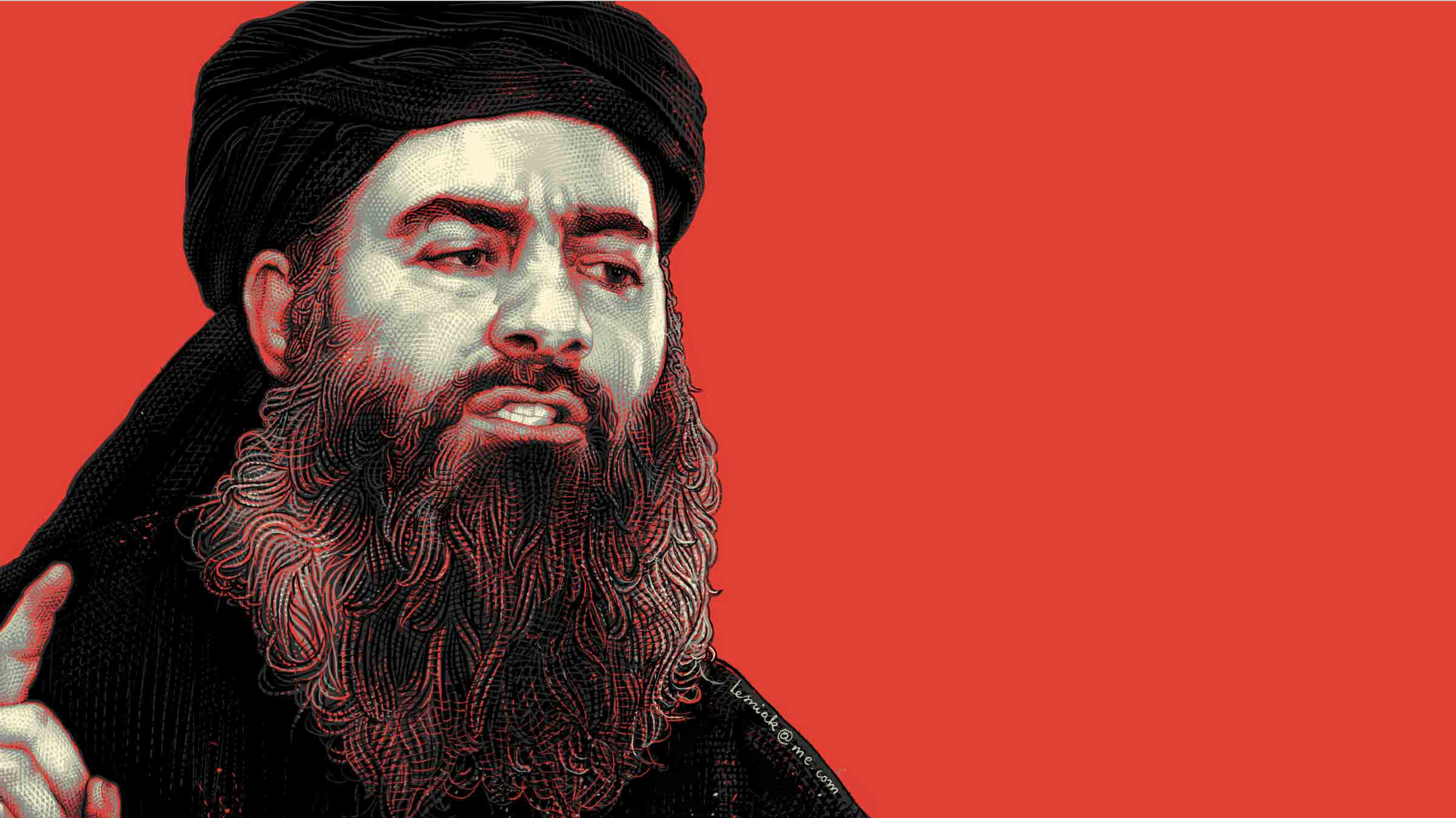
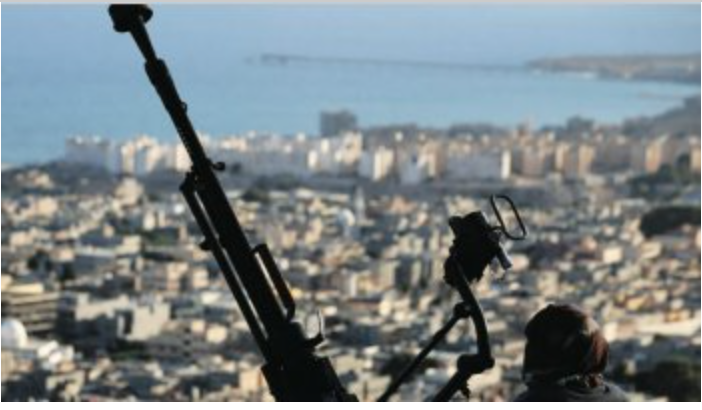
In the past two years, Western media coverage has focused on the growing popularity of Salafist jihadi groups like the Nusra Front (Jabhat Al-Nusra) in Syria. These groups have become both an argument to intervene militarily, as well as a reason to stay out. While this fear has some basis-especially as Al-Qaeda has purportedly announced links with the Nusra Front-it is also colored by post-9/11 counter-insurgency narratives. This has prevented policy makers from situating groups like Jabhat Al-Nusra, a secretive and politically inexperienced organization with little influence in a country with a historically active civil society, intellectual heritage and strong religious institutions.

For now, it appears that Salafist jihadis are set to dominate post-Assad Syria. Yet appearances are deceptive: these groups are operating in a political vacuum and buoyed by the passions of war. Their success is owed partly to alternative political visions, such as socialism and nationalism, being misused by the Syrian Ba’athist regime and the failure of Western promises. In such a chaotic environment, and with the opposition still in disarray, it is natural for Syrian Muslims to turn to their Islamic faith for spiritual succor.

Like the other Abrahamic religions, Islam has developed a martial component, jihad, to deal with the harsh realities of war. This component is activated when war occurs, and switches off when peace returns. The idea of Jihad gives many Syrian Muslims faith, direction and strength in a war where right and wrong is blurred and death ubiquitous.

For the observer with a superficial grasp of Islam, it is easy to equate Syrians resorting to the martial component of their faith with support for groups like the Nusra Front. As Elizabeth O’Bagy says in Jihad in Syria, “Growing popularity is not reflective of popular support for their radical ideology.”

In fact, in Syria’s Salafi Insurgents, Aron Lund says most low level Salafist jihadists are really just religiously conservative Sunnis, many of whom turned religious during the war and “care very little about the theoretical strands of Islamism.” One suspects that there are many who join these groups not because they subscribe to their ideology but because of their fighting ability.

The failure to make this distinction has led many to conclude that the Nusra Front and similar groups will play a disproportionate role in post-Assad Syria, especially seeing that other theoretical strands of Islamism are on the wane. After all, the Syrian Brotherhood’s vision-which is more liberal, according to Ashes of Hama author Raphaёl Lefèvre-seems to have erratic support, and is perhaps geared to the political fracas to come rather than the current situation.

Furthermore, Sufism has been co-opted by the regime, as Dr. Thomas Pierret shows inReligion and State in Syria. Many of the brigades I interviewed cited the Assad regime’s turn to Sufism as one of the main reasons for turning to Salafism in the first place: Abu Jihad, one of the commanders of Zahir Baybar’s brigade, told me that “Sheikh Ramadan Buti and Ahmed Hassoun [both Sufis] failed to condemn the regime when the regime oppressed us.”

Yet Syrians are not passive receptacles. The FSA’s Islamist Brigades have already rejected Al-Qaeda ideology, indicating that Syrians are engaging with their country’s political destiny. In addition, Salafist jihadi groups like Jabhat Al-Nusra demand too much from their adherents. Many Salafist jihadi brigades demand total obedience from their members-which means renouncing things like smoking, because it is considered sinful and an impediment to victory. Many fighters I talked to said that the smoking ban was one of the reasons they did not join these brigades.

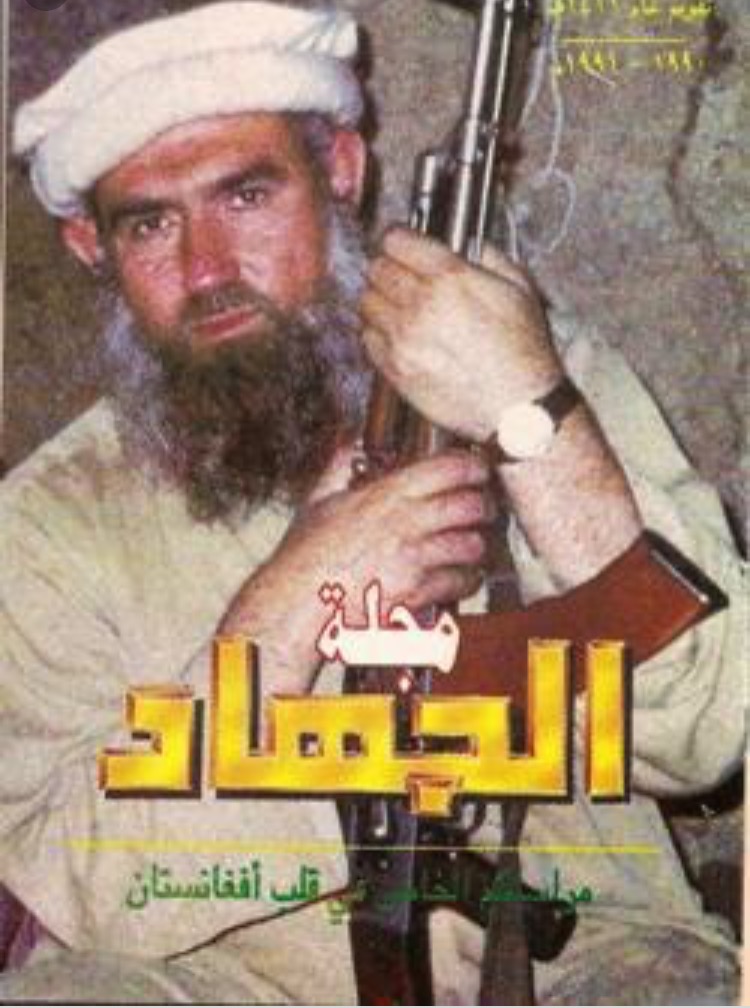
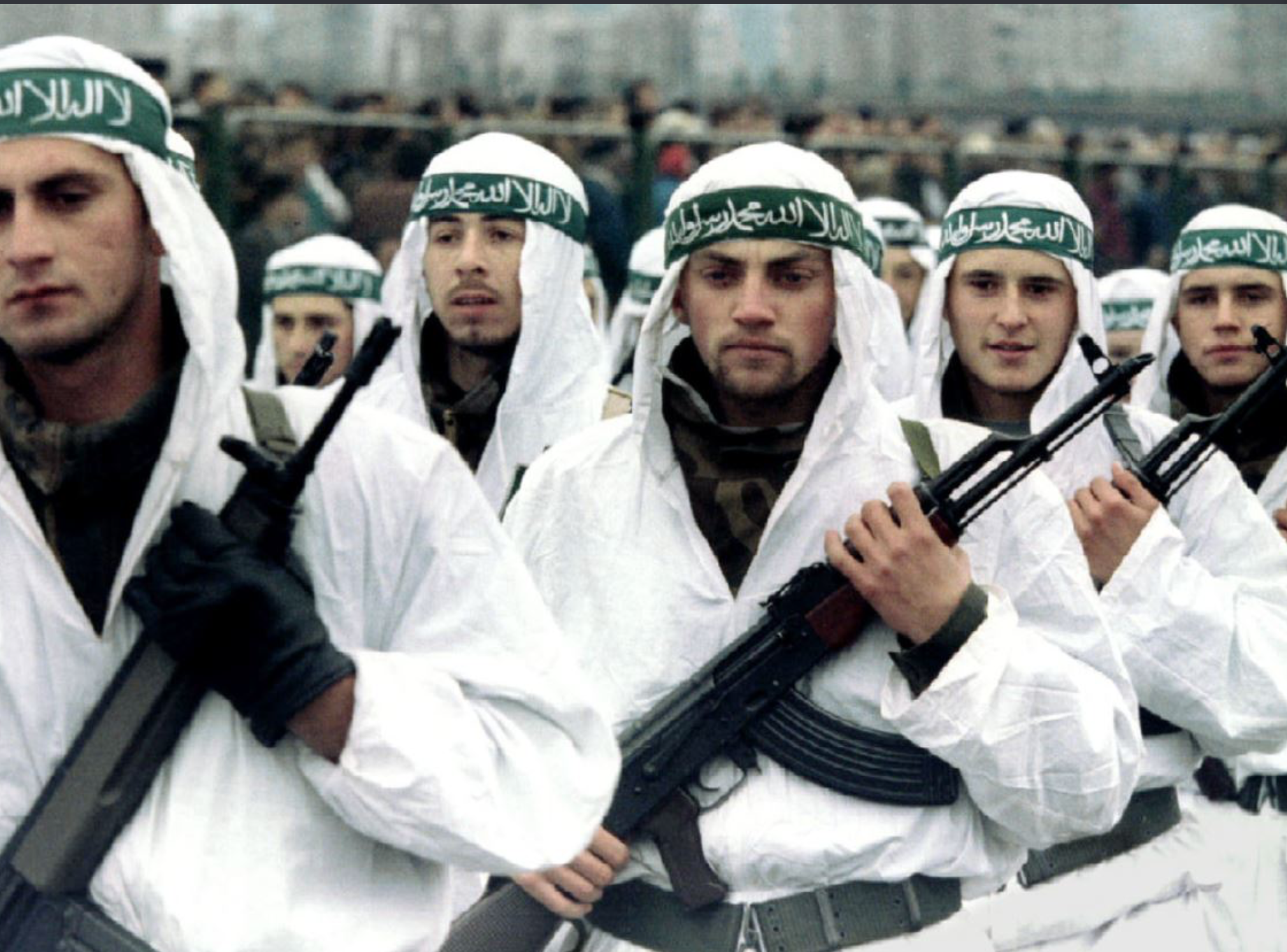
If strictness prevents Syrians from joining these brigades in war, how will they embrace them in peace time? In fact, if the Bosnian experience is anything to go by, Salafist jihadis become a political embarrassment in peacetime. It is no wonder that Salafi umbrella organizations like the Syrian Islamic Front appear more moderate than expected. As Lund suggests, the Syrian Islamic Front, aims for an Islamic state, but still disregards the fatwas of Ibn Taymiyyah declaring the Alawites apostates. Instead, the Syrian Islamic Front, considers minorities like the Alawites and Druze as people of distinct religions who can thus have a place in post-Assad Syria. The implication is that if the front is adjusting to the Syrian milieu, other groups who cannot compromise are likely to be marginalized.

Salafist jihadis will also have to contend with Syria’s tradition of civil activism, its rich intellectual heritage and the established religious institutions (which rival Egypt). Even the Salafi religious scholars I spoke to were tempering the religious zeal of the fighters through study. In such an environment, it seems difficult to envisage politically inexperienced Salafist jihadis dominating Syria’s political landscape after Assad.

The key to diffusing the jihadis is to stabilize the situation quickly. Reviving Syria’s political and economic life and investing in Syria’s indigenous religious institutions will ensure the return of civil society. In such a situation, Salafist jihadis will have to either enter politics, remain quiet, or take up arms. If they choose the first option, they will have to offer compelling ideas and learn compromise. They will be marginalized if they choose the latter two. Already, there are indications that organization like the Syrian Islamic Front are in the process of presenting their ‘third way,’ implying that they are open to dialogue. Western policymakers must stop viewing the Syrian crisis through the prism of counter-terrorism and realize that Salafist jihadis flourish when they are repressed and in wartime-not when civil society is alive.

Article was first published in the Majalla and cross posted in Huffington Post

Share

The Syrian Brotherhood’s Man in London: An Interview with Zuheir Salem

Tam Hussein

Tam Hussein

Out of all the places to meet Zuheir Salem, the number two man of the Syrian Muslim Brotherhood (SMB), a David Brent-style office in Alperton, north London, is probably the least expected. The office of the SMB is so elusive that even the security guard does not know what the SMB are or what they do. According to him, it is some sort of charity where lots of Middle Eastern-looking types come in for meetings and leave late. “I don’t ask any questions, boss–if you know what I mean,” he says with a knowing wink.

Such secrecy is hardly surprising, considering that the SMB were wiped out by Hafez Al-Assad in the 1980s. They are set to make a comeback. Zuheir Salem himself appears to be more like an academic than a back-room dealer. Salem has been a Brotherhood member since the age of fifteen, and comes from a respected and religiously conservative family from Aleppo. His membership in the Brotherhood resulted in exile, which took him across the Middle East and Europe. Only now, after forty years, has he received refugee status. Although he is a prolific commentator in the Arab media, he has received surprisingly little attention from the Western media. One wonders why the Western media, who worry much about the influence of the Syrian Brotherhood in a post-Assad Syria, don’t just pick up the telephone and speak to a man who is only around the corner.

Q: Is the Syrian Muslim Brotherhood happy with the appointment of Ghassan Hitto?

Zuheir Salem: There were a lot of candidates to start with, but we narrowed them down to a few. Of course, the opposition tried to agree on one candidate, but that was difficult. There were two factions who were insisting on supporting their respective candidates. Mr. Ghassan Hitto was fortunate to be chosen. The SMB had said that they would support the candidate who received the most votes. Since Ghassan Hitto had the most votes, we gave him our support–not because he was our preferred candidate.

Q: What do you make of Moaz Al-Khatib’s resignation? Khatib is not from a political background; he is a religious man, an engineer by profession and a man of integrity. The resignation is to do with lack of political experience, but also due to the feeling of responsibility for all the deaths in Syria, especially as he cannot do anything about it and the world isn’t helping. In such a situation, it is easy to say to oneself, ‘If I was outside of this framework, perhaps I could do more.’ I don’t mean this to be a criticism, but rather as a description of his current state.

Q: How do you see the killing of Sheikh Ramadan Bouti? We simply don’t know what happened, but you could make an educated guess. I don’t consider the sheikh a hypocrite, but I criticize his political position. This has caused a lot of suffering to those who followed him. No one from the opposition has claimed responsibility for his death–even the radicals have not claimed it as their doing. The Jubhat Al-Nusra [Al-Nusra Front] have denied any involvement. They usually claim responsibility for anything that they do, but they have not.

Instead, it seems that the regime has been stoking the propaganda machine to create this fear of terrorism. I believe that the person who killed him was Bashar Al-Assad. The regime has a precedent of killing its friends, including Mahmud Al-Zobi, Ghazi Kanaan, Mugniyeh, [and] Muhammad Suleiman. Whilst this is speculation, the regime has an interest in Buti’s killing; perhaps it wants to convince the international community that there really are extremists in their midst who are now in control.

Q: Do the differences among the opposition indicate political inexperience, or is it just a natural consequence of civil society returning? These differences have two points. The first is that it is quite a natural thing to happen. The second point is that the opposition came about from an absence of political life. For fifty years, there has been no political opposition party except for the Muslim Brotherhood. Currently, there is a lack of political organization that can unite these personalities into coherent parties, and that makes communication and dialogue difficult.

Q: From your perspective, is the Al-Nusra Front extremist? Relatively speaking, I believe the maximum following they have is probably seven thousand people. Generally we have not seen political or military excesses from these groups, which we have seen in Iraq or Afghanistan. The opposition was right not to agree with the Americans designating them a terrorist group. I believe that they came about as a result of the regime sending them to Iraq; those who returned were arrested. This new organization was started by the Syrian people, because they didn’t find those who would support them financially. When the Syrians went to the West asking for help, they were rejected. They went to the Arab world, asking for help and no help was forthcoming. So some who were linked with various organizations–and I do not know who they are–supported them. Those who are with them are not with them ideologically, but rather because they can protect themselves.

Q: Do you think the West can communicate with the Al-Nusra Front? First, we want the West to understand our society. It is possible to communicate with these groups. But there is a need to approach the problem without an ideological agenda that can accept other viewpoints. I am not defending Al-Qaeda in terms of their ideology; movements that destroy and kill are rejected in Islam. But the Western approach is imprisoned by an ideological framework. There is a dislike of Islamic civilization, as has been expounded in works such as The Clash of Civilizations. There has to be respect and humility when discussing with opposition groups.

Q: What does the SMB envision for Syria after the fall of the Assad regime? Everyone should be a citizen in Syria. The West looks at religious states through the prism of Western civilization, and political terminology needs to be understood in its context. The understanding of faith and religion differ with each respective civilization. We want a civil state and not a theocratic one, because Islam does not have a clergy that runs the state in the first place. For us, religion is a framework that does not enter into the details; the rules of religion with respect to the public law [make up] only five percent [of all rules]. The rest of it pertains to the private individuals’ conduct in the Shari’a. For us, the Shari’a is about the interest decided by the governed. We will not bring laws which are not agreed on by the citizens; Shari’a can be expressed within the framework of democracy. So if we say that extra-marital relationships are forbidden and [it is] agreed on in parliament, we will go with it; if it is rejected, we will not. This is what we mean by a civil government.

Q: What about accommodating the minorities? The issue of minorities is exaggerated. In Syria, we have always accommodated minorities; we celebrate Christian Easter [and] Christmas, and the Eids all are all public holidays. In the UK, Eid is not a public holiday. In fact, I don’t expect it to be so in the UK. It is the present government that created this sectarianism. Syria is not Iraq, nor is it Lebanon. The Sunni majority have lived side by side and worked together with the minorities. This is also why we must use the term “citizen,” and not Sunni, Christian and Alawite. If we use this term, then sectarianism can be forgotten. Similarly, we cannot have a minority ruling the majority–how would the West accept that in their own countries?

Q: Who should represent Syrians currently? Many pro-Western Syrians come to West and talk as if they represent Syrians. They talk as if Syria will become a part of France or Britain, but they don’t really have much of a following in Syria. The truth is that the people here are religious and they follow religious people, like Moaz Al-Khatib, who are trustworthy. Now we have to find someone who can understand the West and Syrian people. They have to be a bridge between the two. The Ulema [religious scholars] do have a positive role in hemming in the anger in Syrian society, especially in the villages.

Q: What is the difference between the SMB and the Egyptian Muslim Brotherhood? From an ideological perspective, there is not a big difference between us and them, but we are separate organizations. The leader of the Egyptian Muslim Brotherhood does not rule over all the groups. Now, for instance, I am criticizing Mursi–and maybe they are upset with me for that–but the relationship is still one which is based on love and desire for the same objective.

Where we differ is in our policies. For example, Egypt wants to have a fatwa council, which Al-Azhar approves; we don’t want that. We say that what is permissible and what is forbidden is clear. We don’t want to enter the realm of theocracy. Syrian society is different from Egyptian society. The political experience in Egypt is different from ours, and I believe personally that the Egyptian Brotherhood made a tactical mistake. Egypt was a sinking ship, and you can’t come and change it in the way that you are doing. I believe that we have to work within a coalition. I think that Aboul-Fotouh would probably have been a better choice. This is why they are in a difficult position now. There are also outside powers who want to see the Muslim Brotherhood fail. They don’t want to see something like Turkey.

Q: What are some of the difficulties the Syrian opposition is facing? Our five people represent 5000 others, but if you asked other candidates who they represent, they will reply that they represent themselves. This lack of political organization makes communication and dialogue difficult. Many personalities are also idealistic and may not necessarily be realists. Sometimes they represent an idea over the practical issues of party politics. You cannot create a political party with them, except [if] you create a party and give them leadership or an executive role. Forming an executive is difficult because inevitably you have to leave some in and exclude others. This, of course, causes some resentment among the excluded. If there had been a strong political organization this would not have been a problem, since this is quite natural in political life.

Q: Why are you only helping groups affiliated with the Syrian Brotherhood? This is not correct. We do not put this as a condition for rendering help. People think wrongly that the SMB has money, and we simply don’t have it. There are also other reasons: before giving money, we need to establish who they are. There are a lot of armed groups who may use weapons or things that are against their own compatriots in brigandage, and so on. We need to establish their credentials before giving [help] to them. Same thing with aid: before distributing it, there has to be the infrastructure in place in order to deliver this aid.

Q: There are media outlets that have reported that there are some Free Syrian Army Brigades linked to you. Can you confirm this?

British press coverage has served the Assad regime. We believe that there are some parties who have vested political interests, like the Syrian pro-regime lobby working against the revolution. We have approached the left in Britain and they say we are with the USA; when we go to the US they say we are with the Al-Nusra Front; when we go to the Turkish opposition they say we are with Qatar. All of them are playing with the human rights of Syrian people. If Assad stays, you will see Europe flooded with 15 million Syrian refugees. We have found the British media to be contradictory, and the position of the British government is far more advanced than the British press; the American press coverage is better in this regard.

Q: If Assad left for Russia tomorrow, would the conflict end? Yes, if Assad and his group went and the war ended, we [could] set up national dialogue and re-establish trust in order for Syria to reconcile.

Q: What is your opinion of Iran?

Iran is part of the region and they have an important role to play. When the Iranian Revolution happened, we thought it was a good thing. However, we wish that the Iranian revolution–especially in a globalized world–worked within a human rights framework, as opposed to sectarian one. Iran has currently taken the wrong position. Iran needs to work hard to repair its relationship with the Arab world because of their current position.

If you asked me five years ago if I had any issues about them having nuclear weapons, I would have said no and would have defended their right to do so. But now I am worried, because we will be hemmed in by two nuclear powers: Israel on one side and Iran on the other. Unfortunately, they are the ones who created this situation. I don’t want them to become a nuclear power after seeing how they have behaved. I have come to believe that Iran has become a strategic danger; at the same time, we don’t want to make Iran out as the eternal enemy.

Q: What is the SMB’s position on the Israeli-Palestinian conflict? We support Palestinian rights wholeheartedly. It does not mean that once we are in power we will marshal the horses and get ready the soldiers of God. Far from it. The Egyptian Brotherhood ratified the Camp David Accords without backing down on their support for the Palestinian people. We believe that there is international law, which has already designated Israel a pariah state, and we will support the Palestinian cause through these means.

This article was first published in the Majalla

Share

Fighting Mental Prisons: In conversation with Moroccan poet Abdellatif Laâbi

Andre Naffis Sahely and Abdellatif Laabi photo by Tam Hussein

Andre Naffis Sahely and Abdellatif Laabi photo by Tam Hussein

The French have long recognized the literary merit of Abdellatif Laâbi’s work. His writing, often compared to that of Pablo Neruda and Nazim Hikmet, was awarded the Prix Goncourt in 2009 and the Grand Prix de la Francophonie of the French Academy in 2011. Thanks to a gifted young translator, André Naffis-Sahely, Laâbi’s work is now becoming available to an English-speaking audience.

According to Naffis-Sahely, no mean poet and literary critic himself, “Modern French literature has stagnated and it is the likes of Laâbi, Amin Maalouf and other authors on the Francophone periphery who are shaping the French literary heritage today.” Laâbi was born in Fez in 1942 and began writing seriously in his twenties, publishing his first serious novel in 1962. But it was the establishment of an avant-garde magazine, Souffles, which sought to challenge literary conventions and political dogmas, that brought him to the attention of the Moroccan authorities. Consequently, in 1966 he was incarcerated and tortured by the regime, spending nearly a decade in prison. He moved to France following his release, where he worked as a novelist, poet and translator. He has been instrumental in introducing the works of Palestinian poet Mahmud Darwish, Moroccan poet Abdallah Zrika, Iraqi poet Abdelwahab Al-Bayati, and Syrian novelist Hanna Minna to French readers. He is also an essayist and political thinker who recently wrote on the democratic project in Morocco. Despite his renown in France, it is quite by chance that he has become accessible to English readers. André Naffis-Sahely discovered his works while in a Morocco: “I simply fell in love with his work and I decided to make him known.”

I met Laâbi in the Mosaic Rooms in London for a reading of his latest autobiographical novel, The Bottom of the Jar. The author seemed to be on a mission to break down mental prisons that prevent one from thinking freely. When asked whether he had expected to be incarcerated when he launched his magazine in the 1970s, he replied,“To earn a ten year prison sentence and torture was something I had never imagined.” It is a wonder how he found the strength to survive those years. “That is a secret of man; where one finds the strength not to bend to absolutism is truly remarkable and part of man’s particularity. I was convinced that morally I was right, and despite the lashes I could not give in.”

Incarceration has produced genius before: think Dostoyevsky and Solzhenitsyn. Laâbi is no exception; it is as if his prison experience freed him to absorb a plethora of literary and political forms. The ideas of Voltaire, Gramsci, Fanon and Moroccan mystics are framed within an unyielding will not to be caged again. As he says, “I don’t look at myself as an Arab, North African—or French, for that matter. I am a citizen of the world; a bridge, if you like. Take North Africa as an example: it consists of many different influences, African, Arab, Islamic, Berber, Jewish and Roman, and so on, and I will draw inspiration from all the cultures of the world, including France.” There again was that defiance of refusing to be contained by just one current of thought.

But surely France had a role in his imprisonment? Many journalists have documented France’s complicity in the horrors of the Years of Lead under King Hassan II. Were those who rejected French culture as an expression of defiance right? Laâbi answers this stoicly: “The colonialism of the France of yesteryear is something we reject, but we also have to accept that the France of today is different and there’s nothing to say that we shouldn’t learn from her. I refuse to accept the mentality of victimhood and conspiracy found amongst some Arabs. Why should one blame the French for its role in Mali and not also look at the internal politics of Mali itself? We cannot always blame outside conspiracies without looking at the internal conspiracies in our own countries. I refuse to accept the accusations of France being racist when it is like many countries suffering from similar problems. There are good Frenchmen and there are bad ones. In my twenty-five years of living in France, I have always been well received. And I believe that immigration is a gift to both, those who emigrate and those who host them, for both can learn from each other’s cultures.”

I expected Laâbi to be less generous towards the current Moroccan king, but instead he contextualized the situation. “The king,” he said, “is more open-minded, and there has been a lot of reform in Morocco, but we have a long way to go. However, make no mistake these reforms are not necessarily due to the authorities but due to those who spoke out and campaigned for it for the past thirty years.” One would have expected him to be highly critical of the Islamist dominance of the Arab Spring because of his socialist roots, but again the man refused to follow the current trend coursing through North Africa. “The Islamists didn’t have a role in the revolution that happened in Tunisia and other countries; they [the Islamists] are experiencing a resurgence, but we are in a period of transition and we have to wait and see.”

Before leaving, I asked whether he saw his role as a writer to be like Richard Wright, who viewed the artistic endeavor as having a social or political purpose. “I am political, but I am not a politician. A politician seeks to impose and get people to accept his views, whereas the artist merely suggests an idea and lets the reader make up his own mind. That is the great difference between the two. The politician thinks of the political effect now and the artist waits for the seed to bear fruit. The work of Voltaire, Diderot and others took effect slowly, but culminated in the French revolution long after their passing.” Yet again, his answers seemed to refuse compartmentalization.

This article was first published in The Majalla

Share

Crossing into Syria to Take up the Fight

The article first appeared in the New Internationalist in Feb 2013. 

antakya web

Source Tam Hussain

* Ahmed looks out of place in Antakya. His walk still has traces of the London streets; the tattoo of his postcode is partially visible on his neck, even though he has tried his best to remove it. I am surprised that he’s even here, on the Turkish-Syrian border, and that he hasn’t been picked up by the security services. In fact, according to one of my sources, Syrian brigades are sending many foreigners back, because they are usually a liability. Over the following days I realize that Ahmed was born for this kind of work. He deals with stress well; he seems to thrive on it. ‘It’s the only thing I know well,’ he says. ‘I’ve been fighting all my life.’

Ahmed grew up on a council estate. He robbed, he fought, he looted and ‘banged up mans’. Ahmed had chosen his path by the time he was 15 and only a drunken brawl saved him. ‘In prison I had plenty of thinking time. I could read and learnt my deen [Islamic faith]. I started looking around me and I realized what I was missing.’

When Ahmed was released he stayed straight – most of the time. He admits he had some lapses, however. ‘I’m walking down the road and girls I know in my area are blowing me kisses – it’s hard, akhi [brother].’ Sometimes he even went back to selling drugs because he couldn’t make ends meet. ‘I even tried to get married and some convert girl is asking me if I was a money-manor a gun-man!’ It was a Jamaican carpenter who had converted to Islam who taught Ahmed the trade that allowed him to go straight. Stability allowed him to catch up with the world. ‘I read Malcolm X, [I read] anything and everything.’ He started to delve into history. ‘I noticed a trend. The West was bombing Iraq when they had put Saddam in power. They allowed Bosnia to get raped yet they are in Mali like a shot. Why? Afghanistan is the same story… you can’t rely on the West; you have to rely on yourself. All I’ve got is heart and knowing how to fight. Syria’s going to go the same way unless I do something about it. I don’t want to live my life thinking I should have done something when I could.’

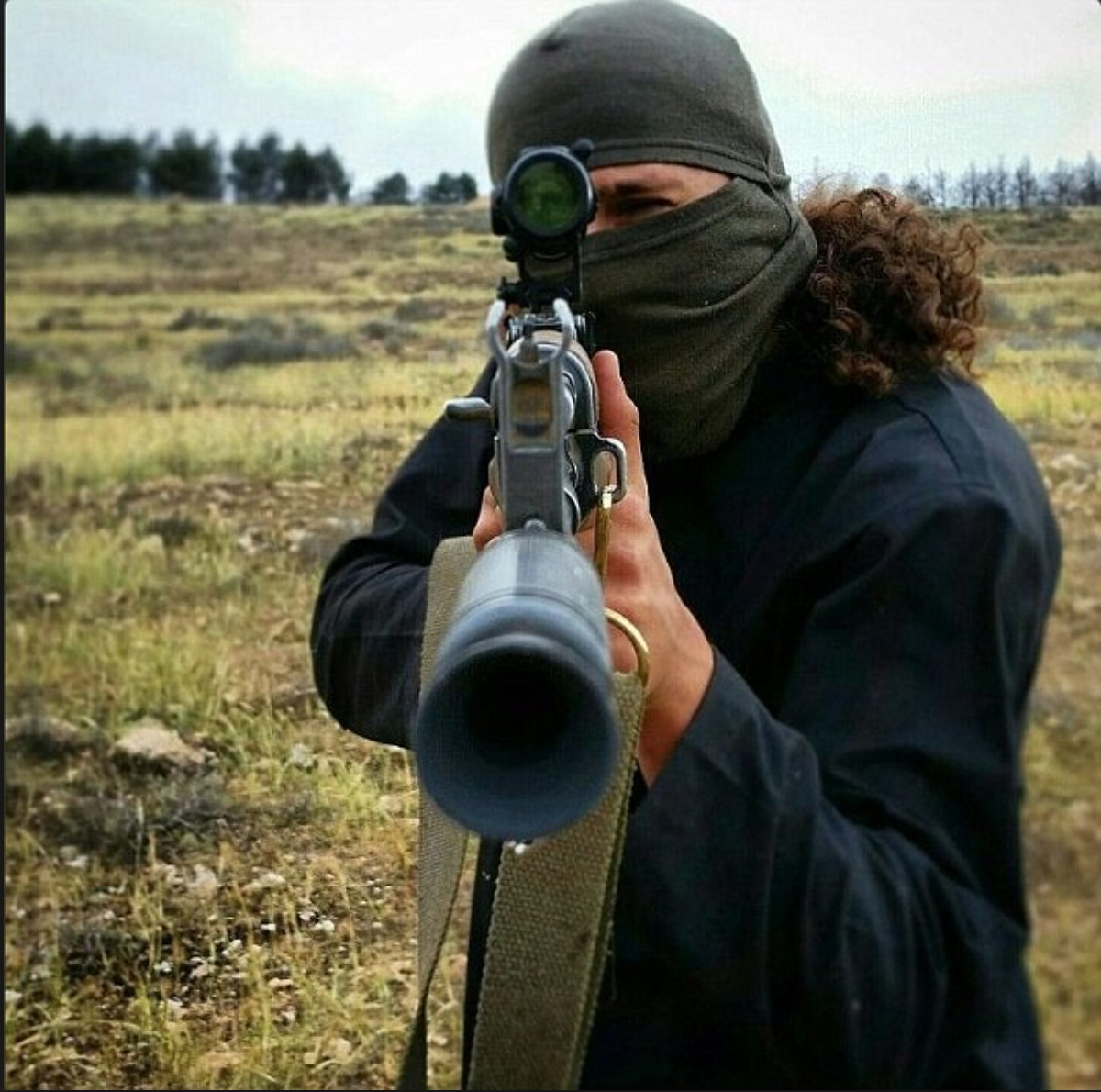
sniper

Source Tam Hussein

Ahmed was echoing an interview I had had with Kemal*, a middle-aged professional in a suburban café in South London. ‘Yes, I went to Kandahar in the 1980s [to fight against the Soviets during their war with the Mujahedin in Afghanistan], and I don’t have any regrets. I can tell my children that I did the right thing.’ It was clear to Kemal that Jihad was one of the noblest callings that anyone could go on. However, Kemal put down strict conditions: ‘You take life as the absolute last resort and not because you take pleasure in it.’ Ask Ahmed and you get the same idealism.  ‘Brother, when you become Shahid [martyr], it’s the ultimate testimony. You are putting your life on the line for the sake of justice and against oppression – this is loved by God.’ It struck me that Ahmed wasn’t impressionable; nor was he brainwashed: he had a clear calling.

Ahmed didn’t have a global agenda; he was moved by the idealism that brought Laurie Lee, George Orwell and others to the Spanish Civil War. I asked him what he thought of the 7/7 bombers who killed 52 people in suicide attacks in London in 2005. ‘Akhi, the Prophet – peace and blessings be on him – would love a city like London: he is free to preach Islam, he is protected by the law, that is what he asked for in Mecca but they persecuted him so he went to Medina.’ But can Ahmed manage to keep that sense of chivalry in a bloody civil war?

I asked him whether he thought the Free Syrian Army or the militant Jubhat al-Nusra Front were better. He looked at me as if I might know the answer better than him. ‘God knows best, but I know that Jubhat are doing what the West should be doing: that is why they are respected.’

The test for Ahmed is not just about crossing the Turkish-Syrian border but also the fact that he has to contend with his inexperience and his own past in the midst of a cruel civil war where the lines of good and evil are blurred. The real crossing for Ahmed will not be crossing the physical border but trying to remain principled and good in an environment where man becomes beast. Ahmed will then know whether he can remain truly noble in the degradations of war.

*names changed to protect identities

wreck of a car where brigade lost family

Source: Tam Hussein


Share

Revolt of the Sheikh

This article first appeared in the New Statesman in January 2013.

Muhammad Al-Yaqoubi has become one of Syria’s leading opposition scholars (Ulama). Before the uprising Syrians respected Al-Yaqoubi due to his pedigree. He descends from a line of Damascene scholars originally hailing from Algeria. His father was a famous Sufi mystic whose face is still found on posters in the more religious quarters of Damascus. Al-Yaqoubi would probably have followed in his father’s footsteps had he not stood up on the pulpit of the Grand Umayyad mosque and denounced the regime. He fled his homeland and found himself addressing foreign dignitaries like the King of Morocco and think tanks like the Royal United Services Institute, whilst remaining in close contact with the brigades who regularly consult him on matters of jurisprudence. He is set to play an important role in post-Assad Syria given that Syrian civil society groups are still in their infancy and Syrians might resort to traditional personalities like him for guidance. On a recent visit to raise funds for a hospital I asked Al-Yaqoubi about his role in shaping his country’s political destiny.

Why did you speak out against the Syrian Government?

I spoke out against the regime in defense of the people. It is a religious obligation to support the weak and oppressed and speak up and not hide the truth. When something kills, it is our job to denounce the killing; it does not make it different when the murderer is the government – it actually becomes more incumbent on religious people, since often rulers in the Middle East try to use religion to justify their power.

What did the government do to you after your speech at the Ummayyad mosque?

I delivered two speeches on Friday, both can be found on Youtube. The following Friday after the first sermon – where I denounced the murder of around 300 Syrians, shabiha or secret service men came to the mosque with concealed guns before the prayer started. I assigned one of my students to speak and waited till May 5th when I delivered my last speech in which I denounced the regime and declared my support of the uprising and demanded full withdrawal of their military presence from neighbourhoods, the release of all prisoners and the removal of all military barricades. I described and denounced the way people were being killed at military checkpoints and held the government responsible for all casualties. I had already asked my wife to leave our family home and I immediately after the speech went into hiding. Our neighbors told us that the secret service came for me three times. I left Syria after a few weeks before a warrant for my arrest was issued. Soon after I left my name was on the government’s ‘wanted list’.

How can the Syrian Ulama help in post-Assad Syria?

The Syrian Ulama represents moderation. After the collapse of the Assad regime they will be needed to heal wounds and reconcile the various groups – especially the three million Baa’th party members who are not criminals. They will also have to confront the extremism of the hard-line salafists who just started their religious war against the rest of the Sunni population. Two months ago, Jabhatul Nusra demolished a shrine of a saint in Aleppo on the basis that it is un-Islamic; I issued a statement condemning it and called for wise people to come out and try to stop them.

What are you doing next?

Now I am trying to form a political movement putting together Sunnis and Sufis to rescue the country and save our people from falling prey to either extremism or secularism.

How can you and your likes alleviate sectarianism in Syria?

The Syrian Ulama are not new to such work. It was always the Ulama who called for the protection of the minorities and defended their rights. Christians have nothing to fear from the Ulama.

Can the likes of you moderate the Salafist brigades within the opposition?

Salafists are of two types: moderate, with whom we can have dialogue; and extreme who do not recognize our authority.

Is the future bright for Syria in the long run?

Yes – It is certainly going to take time to make the change, heal the wounds and rebuild the country.

What can the West do now?

The West made several mistakes in handling the Syrian crisis. Early last year we warned and suggested that the FSA should be promoted and funds should come through it but nothing was done till several military groups grew strong outside the FSA and are now in control of half the country.

Why are the Ulama important in Syria?

Traditionally the Syrian Ulama are leaders. However, by having a few famous Syrian Ulama siding with the regime, the Syrian Ulama lost a lot of ground to the Salafists but still in terms of numbers, the followers of the Ulama are wider.

Why should the West trust the Syrian Ulama and by extension you?

Many of the Syrian Ulama’s works are transparent; they do not have a hidden agenda and will not consider violence as an option. However, if the West does not want to trust us, we ask for an exchange of interests. The West has its interest and we have our own – several of these interests converge and we do not mind exchanging interests. We do not consider the West as an enemy; we are not in a state of war with them and have several treaties with them.

Share

Soul and the City- words from graffiti artist Mohammed Ali

Interview with Mohammed Ali first appeared in the New Internationalist reproduced with kind permission in the December issue 2012.

What are your early memories of Graffiti?

Flicking through Subway Art by Martha Cooper and Henry Chalfant. Growing up in the 1980s, I remember how the book opened my eyes to New York street art and the hip-hop scene. In those days, the phenomenon hadn’t reached most people yet and it wasn’t about ego, cars and women. Although I identified with street art, it focused a lot on leaving a ‘tag’ and I didn’t want to just ‘tag’. I wanted to transform something ugly into something beautiful, pointing not towards the glorification of the artist but towards art itself, and its source – thereby leaving an indelible ‘tag’ on earth.

Tell us about your latest projects…

I’ve just completed a mural in East London near the Olympic Stadium. It featured the iconic image of Tommy Smith and his Black Power salute, representing the idea that sometimes the power of your principles can, if need be, go against your country. I’m working on the next mural to go up in East London, around the Brick Lane area. Another major project I’m working on is with the organization Soul City Arts, delivering Writing On the Wall 2 in London – a theatrical performance of live art and performance poetry.

What are you passionate about politically?

Injustice. I can’t stand it. I get upset about Palestine; I got upset about apartheid in South Africa. I get upset about regimes trying to censor ideas and prevent human beings living in dignity. I get upset about governments wanting you to behave in a certain way or condemning you for the way you look.

Who or what inspires you?

The city inspires me. It compels me to inject life back into the urban spaces we live in. It tells me to take back ownership of our public spaces, take the power away from the authorities who control how our spaces look and feel and return it to the people. Why do our cities have to be so grey and ugly? Colour injects soul back to the city.

What’s your biggest fear?

My biggest fear is not being able to do art and represent a voice coming from my urban British Muslim background. I think it would eat me up. My art has been embraced and celebrated by the mainstream, and there are many communities which recognize the transcendent nature of art – especially street art. I’ve spoken to audiences at the British Museum and the Greenbelt Festival but, sadly, support for my work is most lacking from my own community’s institutions, especially those which have the financial and cultural clout to support me. They see no value in it. They don’t recognize that it’s a space for dialogue, interaction and engagement; a place where prejudices are broken down. I’ve worked with white working-class pupils and they have told me how their perceptions have changed forever.

Where do you feel most at home?

I was born and raised in Birmingham, England. I grew up with Irish and South Asian kids in our neighbourhood. My late father, who migrated to Birmingham, felt intrinsically part of the city’s social fabric. That’s probably why, in spite of the fact that I’ve worked in many parts of the world, including New York and London, I’m drawn back to Birmingham. Many might perceive Birmingham as segregated and it’s true, it does have pockets of different communities that engage little with one another. My hope, though, is to reconnect these disparate communities to show that we share more commonalities than differences

Share

Time of White Horses

Love_Rush!Book review appeared in the New Statesman in December.

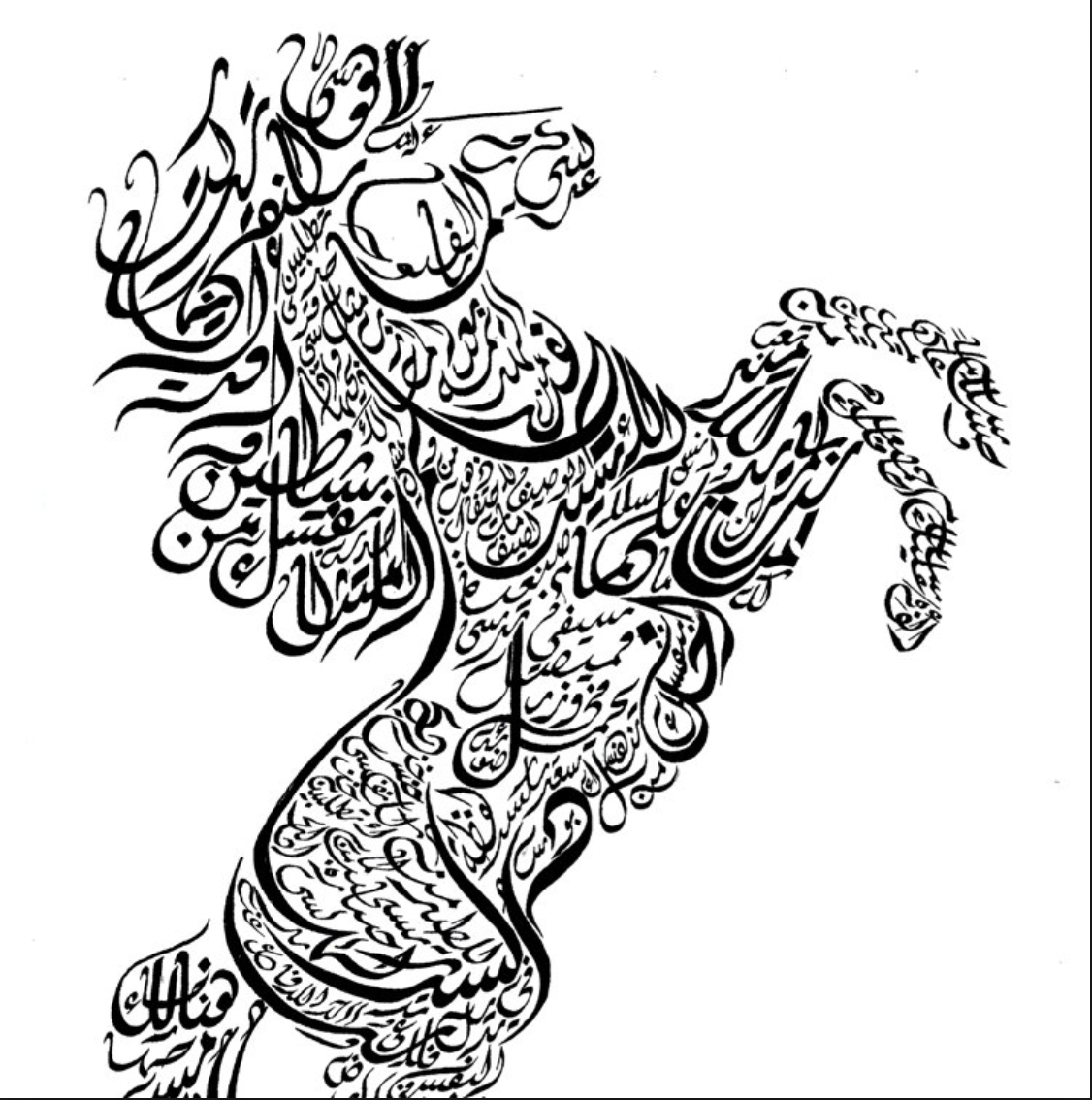
There was an expectation that Ibrahim Nasrallah’s first UK book tour, which began last month, would focus on the invasion of Gaza instead of his new book, Time of White Horses, shortlisted for the International Prize for Arabic Fiction. Nasrallah didn’t focus on the current crisis at all. In fact his lecture, like his novel seemed almost out of place considering that Palestinian artistic expression is argumentative, politically defiant and very current. There is always an unspoken need to explain and justify the Palestinian predicament to those who don’t know. A case in point, Rafif Ziadeh’s “We teach life Sir!” came about as a response to a journalist asking her why Palestinians teach their children to hate. Her performance of Hadeel has touches of the Amnesty International Annual report 2012, when Israeli soldiers used live rounds on Palestinian demonstrators killing eleven children. This is not a criticism of Ziadeh; this is Palestinian art’s peculiarity born as it is from struggle. Palestinians, it seems, cannot afford art for art’s sake.

And yet Time of White Horses is exactly that. It is eloquent and lacks that toe to toe feistiness of the socialist writer Ghassan Kanafani, rather it is reminiscent of Nobel Laureate Naguib Mahfouz’s Cairo Trilogy or Rafik Schami’s Dark Side of Love. Nasrallah’s novel spans the Ottoman period all the way up to 1948 with a stoic eye; it is the product of Palestinian memories intertwined with horse lore and history. In essence it is the story of his ancestral village before it was conquered. Nasrallah’s intensely eloquent voice gives Western audiences an insight into the lives of the marginalized without rattling off numbers.

What makes the novel perplexing is that the author’s experience is full of the vicissitudes of the Occupation. Nasrallah is in many ways a refugee statistic, by the 70s he had lived through “seven wars and scores of massacres”. Like many refugees, Nasrallah became intensely political. And yet his political outlook differed from that of the cartoonist Naji al-Ali and Kanafani the playwright. The difference between them and Nasrallah was that the latter’s politics transcended Palestine and encompassed all the wretched wherever they may be. Nasrallah believes that one has to stand by Palestine because it was a test for the conscience of the world and that one’s nationality was determined by the causes one adopts and defends. Whilst the politics of Naji al-Ali and Kanafani came at a price- they were assassinated allegedly by Israeli intelligence- Nasrallah was persecuted by the Jordanian state. He was prevented from travelling for six years, his books were banned and he faced a three year prison sentence for allegedly undermining the Jordanian state, where he lived.

You soon realize the power of Nasrallah’s novel. Any notion that this is just nostalgic reverie is dispelled. For the author, the disappearance of Palestinian identity is a greater danger than the current assault on Gaza. He sees the removal of identity as the greatest danger to a people. It is this that Nasrallah’s novel seeks to redress. In fact this novel is a response to a quote from former Israeli Prime Minister David Ben Gurion concerning Palestinian identity. Gurion believed that Palestinian national identity did not exist because it lacked its own literature, and soon when the old had died and the young ceased to remember, Palestinian national identity would vanish. Time of White Horses attempts to safe guard that identity and though it is not argumentative or defiant, its contribution to Palestinian identity and world literature is just as important.

Share

Syrian Social Media Soldiers in Syria

This article appeared in the Huffington Post in New Year’s Eve 2012.

Muhammad Ra’d is not your usual Syrian FSA soldier. He doesn’t wield guns nor wear combats. Yet he is the embodiment of his nome de guerre, Abu’l Huda; the father of guidance. To the FSA, him and his likes, are what Pravda was to the Bolsheviks, an information resource that bypasses the official narrative of the regime. Abu’l Huda has the ability to coordinate, attract funding and by showing the atrocities of the regime undermine its legitimacy to all. He provides compelling reasons for the International community to act.

If Abu’l Huda is caught he will be treated like a sniper, no quarter will be given. Only recently seven social media activists trying to reach a satellite communication device were executed on the spot by the regime. The brigades value their sacrifice. When Muhammad I’lami, the social media activist was killed whilst filming he was accorded the same burial rites as a soldier who is killed in Holy War. Muhammad I’lami was considered a martyr and an intrinsic part of the military struggle.

Abu’l Huda and other social media activists are mini information hubs that undermine the propaganda of the regime. His broadcasts on YouTube and Facebook is a ticker tape of the tragic story of Syria that has claimed over 40,000 lives. His typical Facebook page is compendium of horror; of boys with haunting stares and severed limbs, of doctors treating those riddled with bullets, of dead regime commanders, of soldiers being slapped of their chairs because they raped girls and of regime soldiers changing sides. Abu’l Huda’s information is so powerful that the victory signs of Assad’s soldiers seem like empty gestures. He gives those who have yet to choose sides the message that the FSA will be victorious.

Because of these tech-savvy soldiers ordinary fighters who were once farmers, machinists and small time vendors have become social media literate. No matter how dangerous their military operations are they give these activists what they need. So the commander of Ahl-Athar brigade prepares to take on a military airstrip, but before that he gives an interview suffused with religion that simultaneously frightens the West, attracts funding from the Gulf and connects him to the afterlife. Similar tales can be told of other brigades like Umar Mukhtar, Usama bin Zayd and Khaled bin Walid. All know that their deeds are going to be uploaded by Abu’l Huda and others. These uploads are shared across the country ensuring that a steady stream of information erodes any vestige of moral legitimacy that the regime has.

Abu’l Huda knows the danger. He is operating from the very fault lines of Sunni-Alawite country. The countryside has shabiha, government thugs prowling the night whilst no less than fifteen intelligence agencies are there to find the likes of him. He tries his best to hide his internet footprint through internet proxies but it is not always easy. He knows that the internet runs because the government prefers to keep tabs on the FSA’s activities.

His posts are evidence of the immense danger that him and his team are in. Yet Abu’l Huda continues knowing full well that him, his family, his friends are all at risk. He’s a marked man and no longer conceals his name. He uploads a post showing three women lined up against the wall and beaten by soldiers. The camera moves to a young man whose back is turned to us, two soldiers kick him in the head. A young woman is grabbed and slapped so hard her scarf comes off. The man wants to go to her aid but is pounced on whilst she is dragged to the other room. One can only imagine what her fate was. I am reminded of a text I received pleading: “if you can’t send us weapons then at least send us contraceptive pills so we can hide our shame”. After the post you realize why Abu’l Huda risks his life.

Ask Abu’l Huda about the West and he is dismissive. He is disillusioned and so it seems are many of these social media soldiers. Recently over sixty Syrian media activists and media organizations accused the International community of reneging on their promises. The most basic satellite communication devices, some costing as little as $600, have failed to materialize or come with too many strings attached. If these relatively inexpensive devices were distributed liberally it could make a significant difference to the struggle. They would be the stinger missiles of the opposition helping to coordinate the uprising better.

However if the West is not willing to supply inexpensive communication devices for the sake of altruism then let it do so for the sake of self-interest. Having the good will of this media savvy and politically astute segment of the Syrian opposition will prove essential in building long term partnerships in post-Assad Syria.


Share

The Leadership of Muhammad by John Adair, Kogan Page, (2011)

Review by Tam Hussein 

The complexity of modern society has inevitably made life more demanding.  In response, the market is saturated with books offering advice on how to deal with these challenges.  Some are excellent like Stephen Covey’s 7 effective habits, some seem to disregard ethical considerations like ‘44 rules of power’, other smack of infinite American optimism like ‘How to get anyone to do anything’. How then is John Adair’s The Leadership of Muhammad, to make an impact on such a saturated market?

The world’s leading scholar on leadership argues that life is not about effective management but about leadership. The growth of colleges and books on leadership all around the world suggest that he is right. In this regard, his book comes as a welcome addition for corporate business leaders as well as individuals. After all as the Arab proverb goes, ‘every man is given a kingdom, whether he be a leader of an army, sons or goats’.

Anyone wanting a book on the biography of the Prophet should not read this book; he will do well to read Martin Ling’s excellent biography instead. However, if he wants learn about his leadership style then this book is certainly the one. John Adair argues that this unremarkable Meccan merchant managed to unite unruly tribesmen into a coherent whole, who then went on to conquer Spain and India within a hundred years is a remarkable achievement. How did this man cause the downfall of two empires and then have those that he conquered adore him?  The conquests of Genghis Khan were greater but his conquests withered away and his name evokes fear.  Adair’s thesis is that the man possessed universal leadership qualities that can be replicated.  This conclusion is drawn from a distillation of personal experience which includes serving as a platoon commander, Scots guard and the only British soldier to serve in the Arab legion. Moreover, the author also has the academic experience to boot; he is a master of letters at Oxford, a Sandhurst College academic, professor of leadership studies at the University of Surrey and the United Nation Staff College and consultant to many companies and governments around the world.

In only 109 pages, 8 chapters with a brief appendix on the Prophet’s life, Adair incorporates examples from his early life, as shepherd, caravan leader, merchant and prophet to demonstrate his leadership qualities without a Machiavellian maxim in sight. Instead, he includes Arabic proverbs; words from sages like Aristotle, Sun Tzu, Ibn Khaldun and many others. He concludes with the idea that leadership must be ratified in the hearts and minds of men.  A leader must serve, endure the trials and tribulations with his team and possess unshakable confidence, integrity, humanity and humility with the prerequisite experience and knowledge.

Although it is written in simple and elegant prose it can appear as if they were a series of vignettes or rambling reminisces and asides. To some this can be a infuriating after all Business leaders don’t have time for parables and aphorisms. But don’t be fooled, one of the first principles of leadership is humility, as Marcus Aurelius’ teacher said to the future Caesar, “the master does not come to the pupil”, so too does it behoove the reader to humble himself and take Adair, the master, on his own terms. But all of these parables and asides on Bedouin life and the versatility of the camel do have a point. The author wants you to reflect, to figure out these metaphors for yourself since leadership is about thinking.  But in end each chapter is conveniently summarized in bullet points.

What is most remarkable about the book is its lack of sophistry.  His affection for Bedouin culture and his immense regard for his subject are apparent. He demonstrates that it is possible to have ethical leadership even in such a complicated world such as ours. It sheds light on why men will spread out their coat and pray in the middle of Victoria station for this God called Allah, and why there is such devotion for a simple Meccan with the epithet ‘the trustworthy one’.  Digest slowly to derive full benefit. This is surely a leadership classic.

This article appeared in Emel Issue 97 October 2012, reproduced with kind permission.

Share

Is it Because We’re Black?

This article appeared in the Huffington Post

When Syrian secret police showed an interest in me, the Swedish embassy was very supportive. When an American convert to Islam texted me in the middle of the night saying: “get me out of here I’m in a Syrian police cell”, the US embassy got him out the same day. When Mr. Jerome Kwame Hibbel, a Black British citizen, was taken by Syrian secret services in 2006 it took the British embassy fourteen weeks to get him home. Despite the torture that Mr. Hibbel suffered, the Foreign Office closed the matter with little fuss. In Damascus Black and Asian British expats grumbled that their embassy didn’t respond to their needs because they weren’t white.

Many of us put their dissatisfaction down to the cynical British temperament. However when a British friend disappeared for two days I was forced to reassess. I knew that his visa had expired and when he didn’t return I went to the British embassy to inform them. “Go to Jordan please” the voice said on the intercom. I was surprised by the lack of concern for one of their own; after all Syria was a police state. Fortunately, it turned out that my friend had been ill and sleeping off his excursion to Palmyra. However, the attitude of the embassy made me question Britain’s relationship to its ethnic minority citizens.

In Damascus at least, many British ethnic minorities were uncertain as to their government’s commitment to them. Extraditing Talha Ahsan and keeping Gary McKinnon, both diagnosed with Asperger syndrome will only reinforce this perception. Whether the government did it on the merit of each case or to satisfy the Daily Mail is irrelevant. The message to Britain’s ethnic minorities is clear: in the UK you are treated differently if you are a person of colour.

Forget Danny Boyle’s exuberant Olympic celebration of diversity or the pioneering work the UK has done in kicking racism out of football. Spit on Cameron’s wish to provide a sense of shared national identity open to everyone. Throw out the fifty three million pounds spent on a five tiered Prevent strategy to tackle Muslim religious extremism according to a Congressional Research Services’ paper. The decision has undermined the work of thousands of teachers trying to implement government initiatives like its community cohesion policies in the curriculum.

The decision tells British ethnic minorities that even if they supported the English Cricket team, went down to the pub for a pint and a bag of pork scratchings, tried their hardest to remove that Indian or Afro-Caribbean accent, even fought valiantly for Queen and Country; here in this fair land, they are unequal. Instead, in this country according to the Runnymeade Trust’s paper, Criminal justice v. Racial justice, their sort is over-represented at every stage of the criminal courts. In this nation, according to offender management statistics, their sort will make up 20% of the prison population. In fact, the black population, a miniscule 3.7% of the UK population, contributes a whopping 13.4% of the UK prison population. In this country, in 2010 many British ethnic minorities have experienced the increase of stop and search tactics by 164% whilst their white counterparts have seen a decrease.

Unfortunately, there is another unintended consequence of Theresa May’s decision; it will be applauded by the Far Right. The paper, Pedlars of Hate by the Institute of Race Relations has demonstrated how the continent is seeing a rise in the Far Right targeting Black, Roma, Muslim and Jewish communities. The decision to extradite Talha Ahsan and keep McKinnon is bad for all of us. It undermines the values that the majority of British citizens hold dear and will damage the trust that many British ethnic minorities feel towards their country.

The case of Talha Ahsan reminds me of Richard Wright’s Native Son. Wright shows us through the story of Bigger Thomas, a poor black man who murders a wealthy white girl, how he is the product of an unjust system full of hypocrisy. It is this unequal society that treats young black men born from the same soil differently. Wright never apologizes for Thomas’ crime and yet he shows us how American society hounds the protagonist, turns on him and kills him whilst denying him a fair chance to stand trial. I fear that there’s a bit of the Native Son in the case of Talha Ahsan and others experiencing the UK’s justice system. And if the British government is willing to peddle this hypocrisy then please let’s not be surprised when alienated British ethnic minorities turn around and say “is it because we’re black?”

Share